 Animal Ears
 🦈 How animals hear
Shark hearing range in hertz
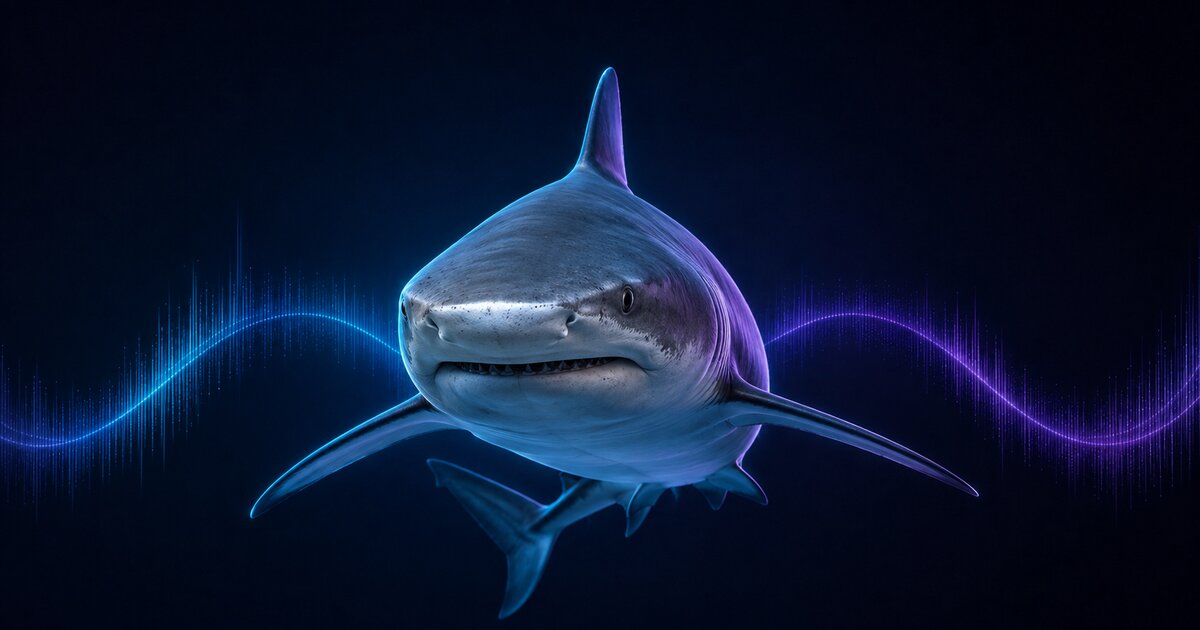
Negaprion brevirostris
Only lows interest it: a wounded fish thrashing hundreds of metres away.

In short
A Shark hears from about 10 Hz up to 1 kHz, and the pitch it catches best is near 300 Hz. Animal Ears lets you take any sound of yours and hear it exactly as it would.
A shark lives on the ground floor of sound: 10 to 1,000 Hz, with its best point at 300 Hz. No highs at all. And it doesn't really ‘hear' pressure the way you do: it feels the back-and-forth of the water's particles as the wave passes, something halfway between hearing and feeling. That narrow band is precisely the irregular noise a wounded fish makes as it thrashes, and it can follow it from a long way off. Run your sound through its ears and a dull rumble is all that's left: the rest doesn't exist for it.
Hertz (Hz)
Which pitches it hears
Hertz count how many times per second a sound vibrates. Few vibrations = low (the rumble of thunder, about 30 Hz). Many vibrations = high (a microwave beeping, about 3,000 Hz). And ‘1 kHz' is just shorthand for 1,000 Hz. You hear, roughly, from 20 Hz to 20,000 Hz.
A low sound rumbles (think thunder); a high sound squeals (think a mosquito). These three numbers mark how far down this animal goes, how far up it goes, and which pitch it hears most clearly of all.
| Lowest it hears | 10 Hz |
|---|---|
| Highest it hears | 1 kHz |
| Hears most clearly | 300 Hz |
| What you hear | 20 Hz – 20 kHz |
Your ears vs a Shark's
Yes: it picks up rumbles so deep you would, at most, feel them in your chest, down to about 10 Hz. Your floor is 20 Hz. It does miss the highs you can hear, though: above about 1 kHz there is nothing left for it.
Audiogram
| Hertz (Hz) | Hearing threshold |
|---|---|
| 10 Hz | 95 dB |
| 20 Hz | 88 dB |
| 40 Hz | 82 dB |
| 80 Hz | 78 dB |
| 100 Hz | 76 dB |
| 200 Hz | 74 dB |
| 300 Hz | 73 dB |
| 500 Hz | 75 dB |
| 600 Hz | 79 dB |
| 800 Hz | 86 dB |
| 1 kHz | 95 dB |
Low-frequency curve in dB re 1 µPa, but sharks have no swim bladder: they detect PARTICLE MOTION via otolithic organs. Pressure numbers are a tank-measured proxy; use for relative low-frequency EQ shape only.
Can a Shark hear things you can't?
A Shark picks up everything from 10 Hz (the deepest) to 1 kHz (the highest), and hears best around 300 Hz.
Yes: it picks up rumbles so deep you would, at most, feel them in your chest, down to about 10 Hz. Your floor is 20 Hz. It does miss the highs you can hear, though: above about 1 kHz there is nothing left for it.
Frequently asked questions
What sounds can a Shark hear?
A Shark picks up everything from 10 Hz (the deepest) to 1 kHz (the highest), and hears best around 300 Hz.
Can a Shark hear things you can't?
Yes: it picks up rumbles so deep you would, at most, feel them in your chest, down to about 10 Hz. Your floor is 20 Hz. It does miss the highs you can hear, though: above about 1 kHz there is nothing left for it.
How does Animal Ears make a sound like a Shark would hear it?
Scientists have measured, pitch by pitch, the quietest volume at which a Shark starts to hear each sound. We take that curve and apply it to your recording like a giant equaliser: we turn up the pitches the animal hears beautifully and turn down or remove the ones that simply don't exist for it. The result gets close to what it would notice... but it still arrives through your ears.
Hertz (Hz)
Hertz count how many times per second a sound vibrates. Few vibrations = low (the rumble of thunder, about 30 Hz). Many vibrations = high (a microwave beeping, about 3,000 Hz). And ‘1 kHz' is just shorthand for 1,000 Hz. You hear, roughly, from 20 Hz to 20,000 Hz.
Infrasound
Sounds so deep your ears no longer register them: below about 20 Hz. Rather than hearing them, you'd feel a tremor in your chest, like a heavy lorry going past. Elephants and pigeons do sense them, even from miles away.
Where these numbers come from
- Nelson, D.R. (1967). Hearing thresholds… in the lemon shark. Bull. Marine Science, 17(3), 741–768.
- Casper, B.M. & Mann, D.A. (2006). Evoked potential audiograms of the nurse shark and yellow stingray. Environ. Biol. Fishes, 76, 101–108. doi:10.1007/s10641-006-9012-9
More animals
Dragonfish
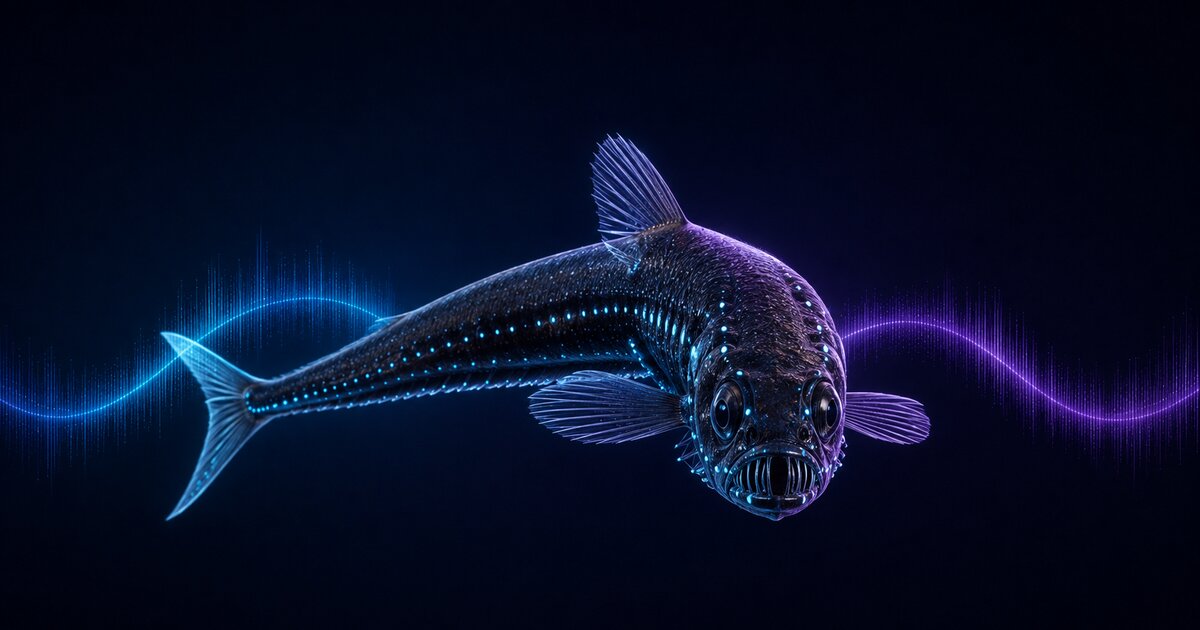
A listener from the abyss: we know so little that this is an honest hypothesis.
Goldfish
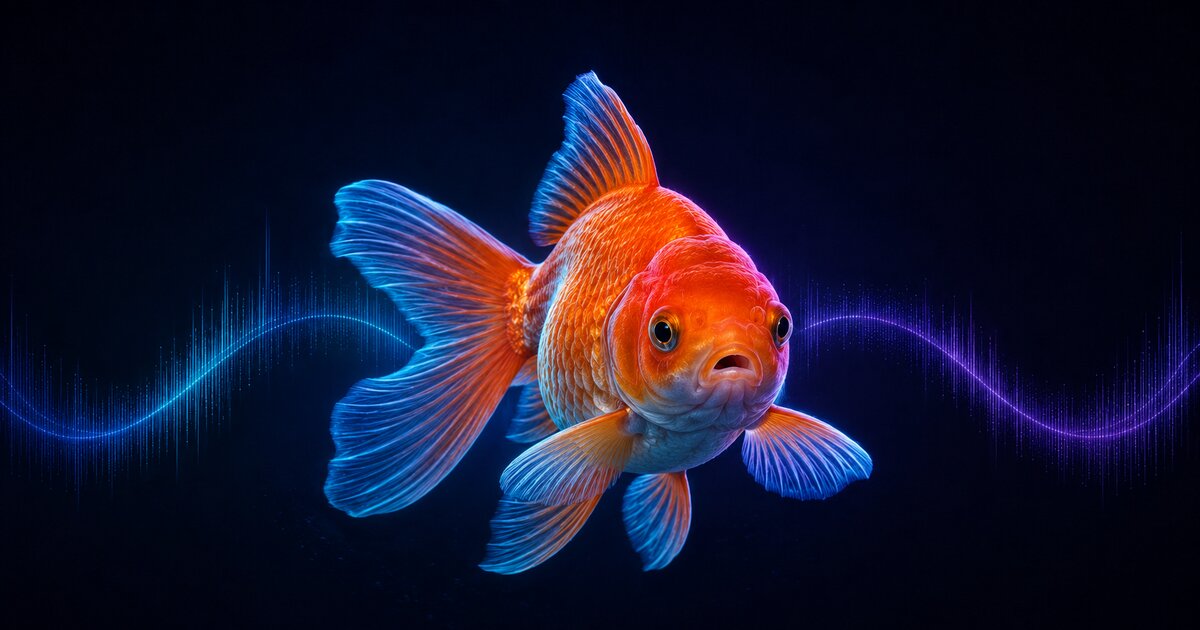
Top of the class among fish: it comes with a built-in amplifier.
Clownfish
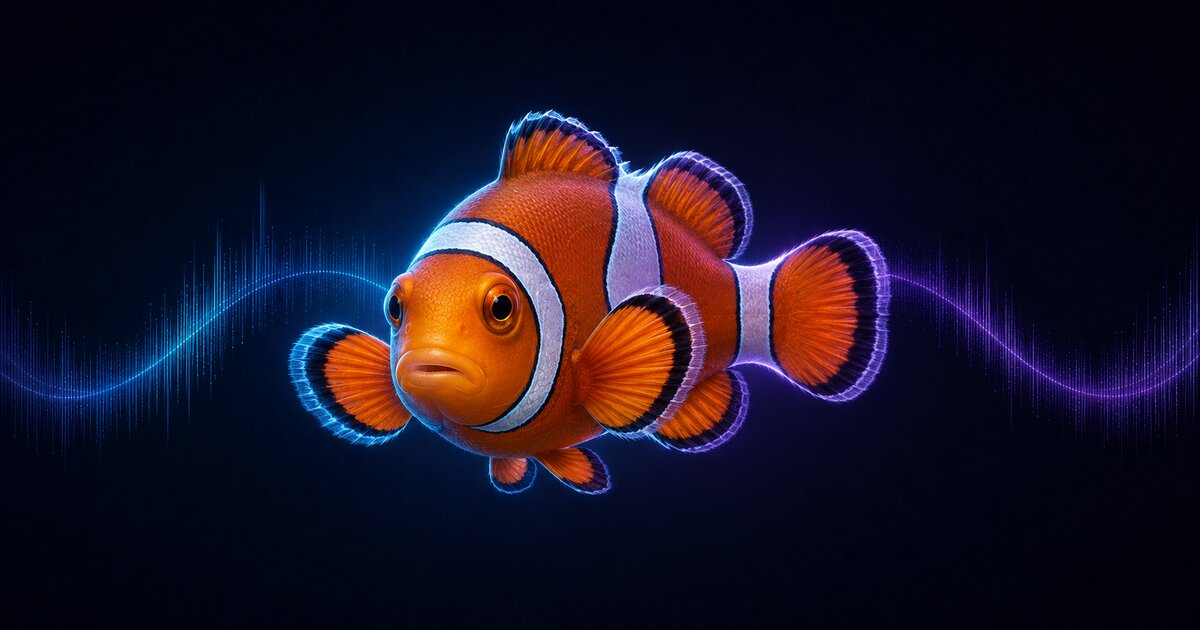
Its larvae listen for a reef crackling to find their way home.
Sea turtle
It hears underwater and only lows: the highs go straight past it.
Animal Ears
Get Animal Ears
Upload a sound of your own and hear it exactly as an animal would.